As the day dawns on the fiftieth annual Hunger Games, fear grips the districts of Panem. This year, in honor of the Quarter Quell, twice as many tributes will be taken from their homes.
Back in District 12, Haymitch Abernathy is trying not to think too hard about his chances. All he cares about is making it through the day and being with the girl he loves.
When Haymitch’s name is called, he can feel all his dreams break. He’s torn from his family and his love, shuttled to the Capitol with the three other District 12 tributes: a young friend who’s nearly a sister to him, a compulsive oddsmaker, and the most stuck-up girl in town. As the Games begin, Haymitch understands he’s been set up to fail. But there’s something in him that wants to fight . . . and have that fight reverberate far beyond the deadly arena.
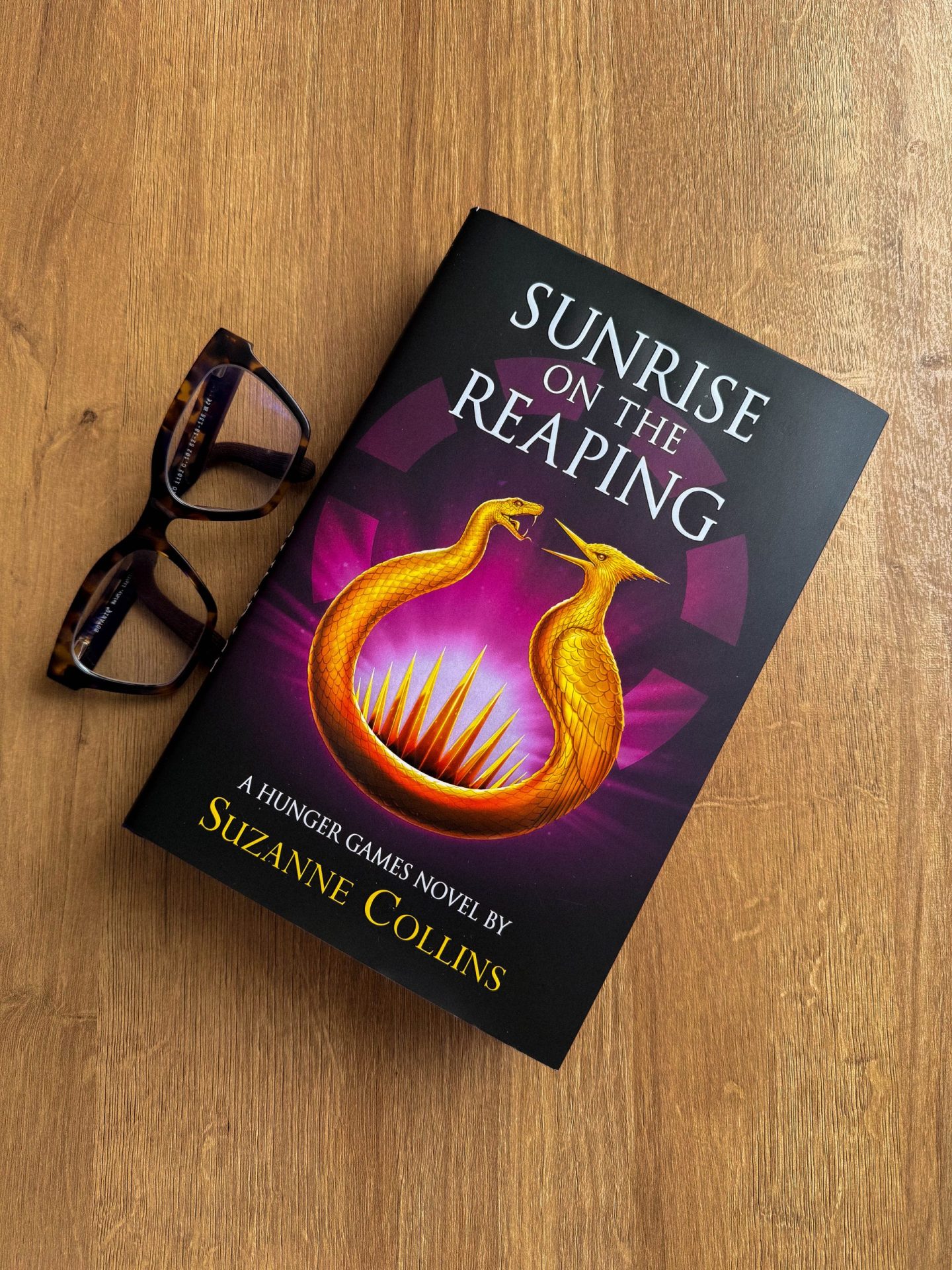
“THE SNOW MAY FALL, BUT THE SUN ALSO RISES.”
Sunrise on the Reaping felt like coming home—only to find the furniture rearranged, the lights dimmed, and a ghost or two still lingering in the corners. For longtime Hunger Games fans, this book will certainly deliver a hit of nostalgia. It’s filled with names, settings, and callbacks that make it impossible not to remember reading the original trilogy for the first time under the covers. But once that initial high of being back in Games fades, what’s left is a story that struggles to justify its own existence.
Let’s get one thing clear: I am a diehard Hunger Games fan. Always have been, always will be. I was there in the trenches on Tumblr as a teen. So the announcement of a Haymitch prequel was so exciting. The idea of peeling back the layers of his trauma to explore what really happened during his Games? Sounds brilliant. Sign me up, Suzanne!
In execution, Sunrise on the Reaping is… fine.
At best, it adds a slight whisper of context to what we already knew. At worst, it’s a repetitive, oddly hollow retelling of events we were already aware of, offering very little new information or emotional weight. The writing style leans hard into the YA format (as I should have known, given the series’ roots), but it sometimes feels stilted or strangely juvenile even by genre standard.
There’s a surprising lack of urgency or momentum in the early chapters and the book only somewhat picks up once we’re in the arena. The biggest disappointment, however, is Haymitch himself. Somehow, after nearly 400 pages inside his head, I still don’t feel like I know him any better. He comes off less like a young man facing impossible choices and more like a character on autopilot. We’re told about his relationships, particularly with Lenore Dove, rather than being shown why they matter. And Lenore, unfortunately, never feels like more than a sketch.
I don’t hate it at all. There’s a kind of comfort in returning to Panem. Throughout, there are glimmers of Suzanne Collins’ signature commentary. The quiet resistance, the casual cruelty of the Capitol, the ways in which trauma reverberates through generations. The ending, particularly the final moments with Lenore, is genuinely moving. There’s a flash of something raw and real there—a reminder of what The Hunger Games has always done best: confronting the cost of survival, and the complicated morality of rebellion. If only the rest of the book had carried that same weight.
Sunrise on the Reaping feels more like a companion piece, or perhaps a filler episode. It adds texture to Suzanne Collins’ world, but not much substance. It reiterates ideas we already understood: that the Games are cruel, that rebellion simmers long before it boils over, that no victor ever truly wins. All important points—but all previously and, frankly, more effectively explored in the original trilogy.
Is this book fan service? Absolutely. And if you’re okay with that—if you just want another walk through the ashes of District 12 and a brief glimpse into one of its most haunted residents then you’ll likely find something to appreciate here. I did. But I also found myself wondering, by the end, whether this story needed to be told. And I’m not entirely sure the answer is yes.
Flawed, nostalgic, intermittently moving, but ultimately a little empty, Sunrise on the Reaping is for fans who want to spend a little more time in Panem even if it doesn’t show us anything we didn’t already know.
That being said, I will be seated for the movie adaptation and am absolutely here for Ralph Fiennes as Coriolanus Snow.



Leave a Reply