A gripping tale of obsession, superstition and ambition, set against the atmospheric backdrop of Victorian London. Be careful what you wish for it may just come true.
At The Mercury Theatre in London’s West End, rumours are circulating of a curse. It is said that the lead actress Lilith has made a pact with Melpomene, the tragic muse of Greek mythology, to become the greatest actress to ever grace the stage. Suspicious of Lilith, the jealous wife of the theatre owner sends dresser Jenny to spy on her, and, desperate for the money to help her family, Jenny agrees.
What Jenny finds is a woman as astonishing in her performance as she is provocative in her nature. On stage, it’s as though Lilith is possessed by the characters she plays, yet off stage she is as tragic as the muse who inspires her, and Jenny, sorry for her, befriends the troubled actress. But when strange events begin to take place around the theatre, Jenny wonders whether the rumours are true and fears that when the muse comes calling for payment, the cost will be too high.
AS I WATCHED HER, WASHED IN THAT RED LIGHT, I ALMOST BELIEVED THAT MELPOMENE WAS ON HER WAY. EVERY BEAT OF THE DRUM WAS A FOOTSTEP. A TREMOR SHOOK LILITH’S FRAME. HER EYES FLEW OPEN, FIXED AND STARING AT THE GALLERY. THE AUDIENCE LOOKED OVER THEIR SHOULDERS. DID SHE SEE SOMETHING WE COULDN’T.
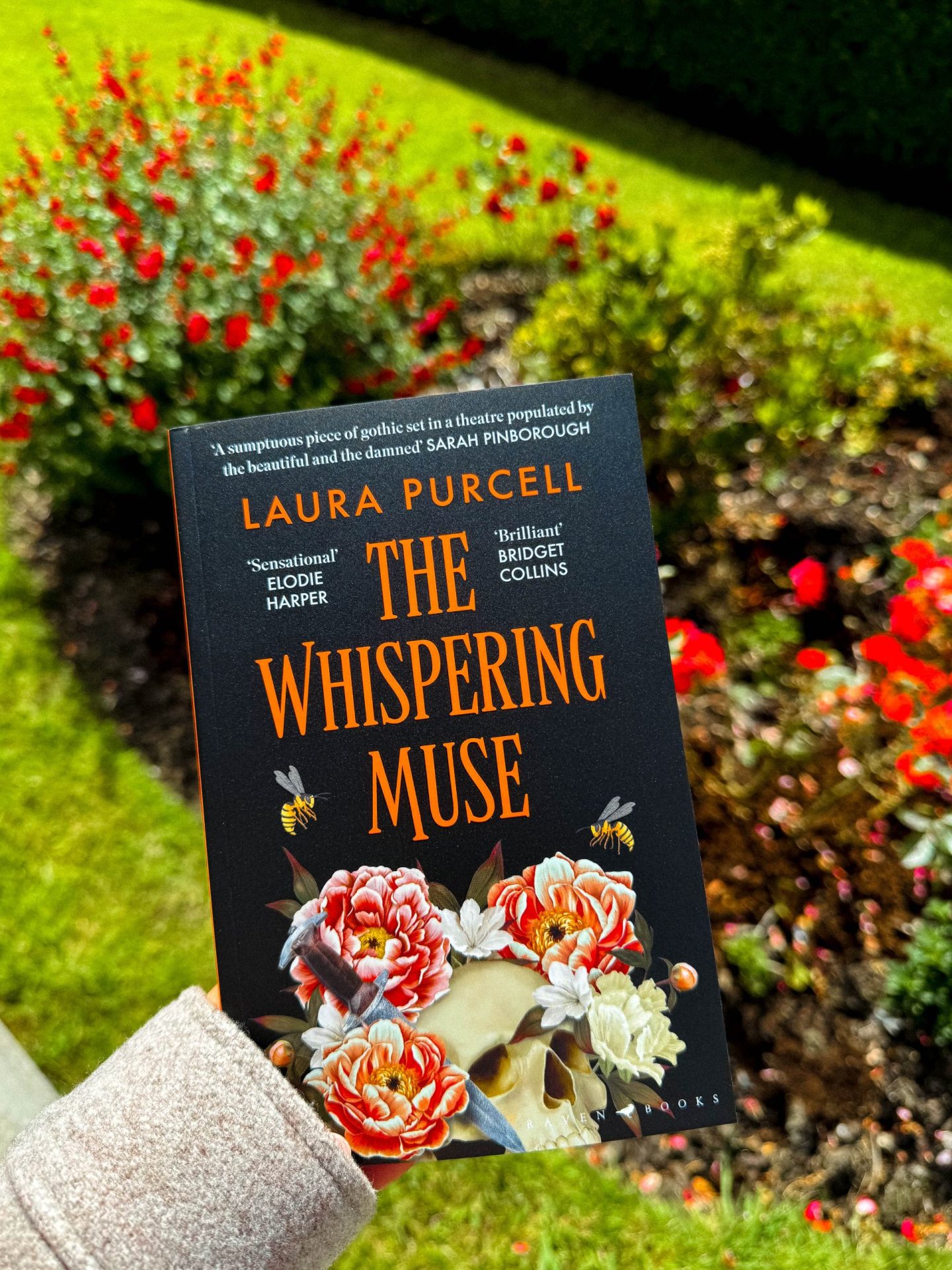
There are few writers today who command the Gothic as masterfully as Laura Purcell, and The Whispering Muse is a shining (or should I say shadowed?) testament to her talent.
This is an atmospheric, richly layered novel soaked in blood, ambition, and theatrical superstition, set against the irresistible backdrop of a Victorian-era West End theatre. If you love stories that blur the lines between reality and the supernatural, that make you question what’s truly haunting the stage—or the people upon it—this is the book for you!
Structured like a five-act play, each section of the novel revolves around a different production at the Mercury Theatre, from Macbeth to Dr Faustus, and each one mirrors the inner descent of the characters. It’s an ingenious device that keeps the tension high and the parallels biting. The Mercury itself feels alive—moody, cloaked in velvet and shadow, full of whispered secrets, whispered names, and whispered fates. The theatrical curse of Macbeth is just one of many eerie nods that build the novel’s uneasy atmosphere.
At the heart of the story is Jenny, our flawed, compelling narrator. Her voice is immediately absorbing, and Purcell’s prose moves seamlessly from intimate and plainspoken to lyrical and razor-sharp as the novel plunges deeper into its chilling themes. Jenny’s gradual entanglement in the dangerous dynamics of the theatre—its betrayals, rivalries, and increasingly bizarre rituals—is as riveting as any performance staged within its walls.
And then there’s Lilith. Lilith is one of those unforgettable characters: magnetic, menacing, beguiling. As Lady Macbeth, she’s a force of nature; off-stage, she’s just as bewitching and unsettling. The tension between her and Jenny crackles with unspoken danger, desire, and dread. Their relationship is central to the story’s emotional core, and as the tragedies begin to pile up, so does the sense of something—or someone—pulling the strings behind the curtain.
Purcell doesn’t shy away from horror here. There’s real gore, real psychological terror, and moments that made me shiver. But it’s never gratuitous—it serves the drama, the mythos, the aching heartbreak at the novel’s core. With references to Shakespeare and Greek mythology threaded throughout, it was absolute hit with me and the story really deepens its resonance while never losing sight of its characters’ human frailty and ambition.
This book had me under its spell from page one. It’s tense, emotional, gruesome, and utterly captivating. Even months after finishing, I still think about it.
A dark jewel of a book—gorgeously written, deeply haunting, and absolutely unforgettable.


Leave a Reply